
Kia Stinger
Option 1

+ Min 60 RWKW

$2650 INC GST
Stinger GT 3.3lt – Uni-X ECU
This Package includes the following:
- Uni-X ECU
- LIVE Dyno tune
Results
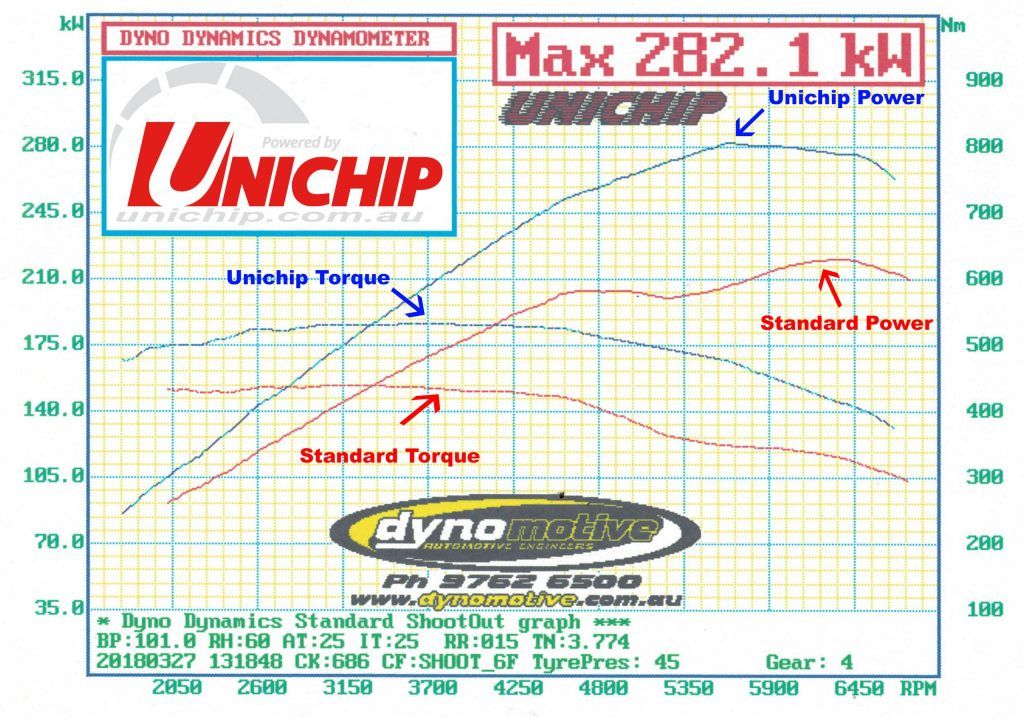
-Power-
Standard: 210rwkw
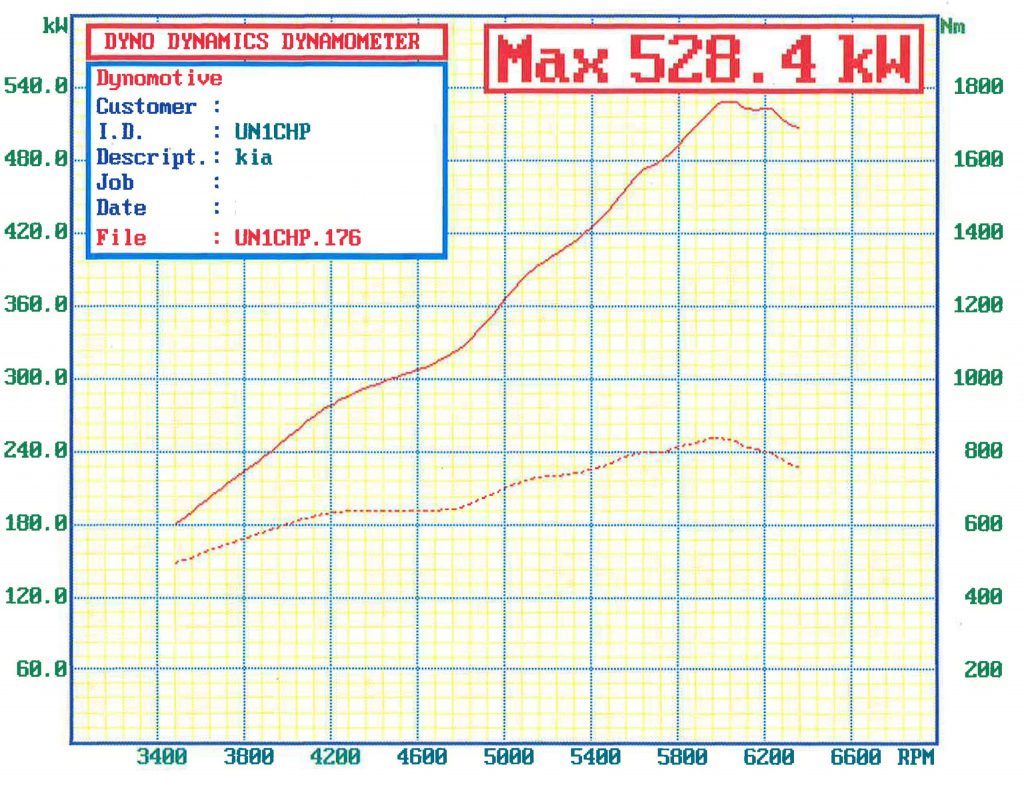
Unichip: 282.1rwkw
-Torque-
Standard: 410nm
Unichip: 510nm
Tuning Fuel Type and Your Kia Stinger GT
A common misconception, even among some tuners, is how the factory ECU in the Kia Stinger GT manages ignition timing and fuel control. Like most modern turbocharged engines, the ECU uses an active knock control system. This system continuously advances ignition timing until knock (pre-detonation) is detected, then immediately retards timing to maintain safe operation while targeting Maximum Brake Torque (MBT) without knock.
While this allows the engine to operate on various fuel grades such as 91, 94, 95, or 98 octane, the system operates reactively rather than proactively. Changing fuel grades does not override the control strategy. Instead, the ECU constantly adjusts ignition timing based on the knock resistance of the fuel being used.
For example, during wide-open throttle (WOT) operation in a Stinger GT, ignition timing typically settles around 15–17 degrees on high-quality 98 octane fuel, while lower octane fuels such as 91 may see timing reduced to roughly 11–13 degrees depending on load and intake air temperature. Even if additional timing is commanded in the ECU calibration, the factory knock control strategy will still intervene and limit timing when knock activity is detected.
Fuel control functions in a similar way. The ECU relies heavily on wideband oxygen sensors to maintain precise fuel trims. Switching between non-ethanol fuel and E10 typically results in only small corrections, usually around 3–4% increase in fuel trims due to ethanol’s lower energy density.
Although the factory ECU can adapt to different fuels, the best results always come from tuning the engine specifically for the fuel being used. This allows the engine to achieve optimal power, torque, and efficiency, rather than relying on reactive corrections after knock has already occurred.
Key Points
The Stinger GT can run different fuel grades, but the ECU only adapts after knock activity is detected. The system relies on knock sensors to pull timing when necessary, meaning the engine reacts to knock rather than preventing it entirely.
If the vehicle is tuned on 98 octane, switching to E10 or 91 octane will cause the ECU to compensate only after knock is detected. Once the ECU transitions to its lower octane timing strategy, it may remain there until either the ECU relearns through several drive cycles or the system detects consistently knock-free operation. In many cases, this can take one or two tanks of higher quality fuel.
Running 91 octane may result in a power reduction of roughly 10–15 kW at WOT, though this difference is rarely noticeable during normal day-to-day driving conditions.
E10 fuel may reduce fuel economy by around 3–4% due to ethanol’s lower energy content. While the lower cost per litre often offsets this, ethanol is hygroscopic, meaning it absorbs moisture over time. Long-term use of ethanol-blended fuels can sometimes contribute to injector contamination or increased spark plug wear.
Why Optimised Tuning Matters
Optimising the calibration using a system such as the Uni-X ECU provides far better results than relying solely on the factory control strategy.
Unlike traditional reflashes, the Uni-X ECU communicates directly with engine sensors, providing full 3D control of fuel, ignition timing, and boost while working alongside the factory ECU. This allows precise control of engine operation without relying on the factory ECU to constantly react to knock events.
By tuning the engine proactively for a specific fuel type, the calibration can safely target optimal ignition timing and boost levels without triggering excessive knock intervention.
For example, tuning a Kia Stinger GT specifically for 95 octane fuel can often produce better real-world performance than running 98 octane on a completely stock calibration. A properly optimised tune improves throttle response, torque delivery, and overall drivability, often requiring less throttle input during acceleration while improving efficiency.
Another advantage is that when the factory ECU detects knock and reduces timing, it does not immediately return to the higher octane ignition tables once better fuel is introduced. It takes time and multiple drive cycles for the ECU to relearn safe timing values. When the engine calibration is optimised with the Uni-X ECU, this delay in timing recovery is eliminated, allowing the engine to maintain optimal ignition timing consistently.
The Bottom Line
While the factory ECU in the Kia Stinger GT is designed to safely operate on a range of fuel types, optimising the tune for a specific fuel grade unlocks significantly better performance and efficiency.
By tailoring the engine calibration with systems like the Uni-X ECU, you can maximise the Stinger’s potential, ensuring it delivers stronger power, improved torque, better throttle response, and greater fuel efficiency, all while maintaining safe engine operation
Option 2
+ Min 65-70 RWKW
$3300 INC GST
Stinger GT 3.3lt – Uni-X ECU
This Package includes the following:
- Uni-X ECU
- LIVE Dyno tune
- Air Intake
Air Intake:
- Increased horsepower
- Tuned and dyno-tested to improve acceleration and engine sound
- Easy to install using commonly available tools
- Air filter lasts up to 100,000 miles before cleaning is required (depending on driving conditions)
- Washable and reusable oil-free filter media
- Roto-molded Plastic Air Intake Tubing
- AEM Lifetime Limited Warranty
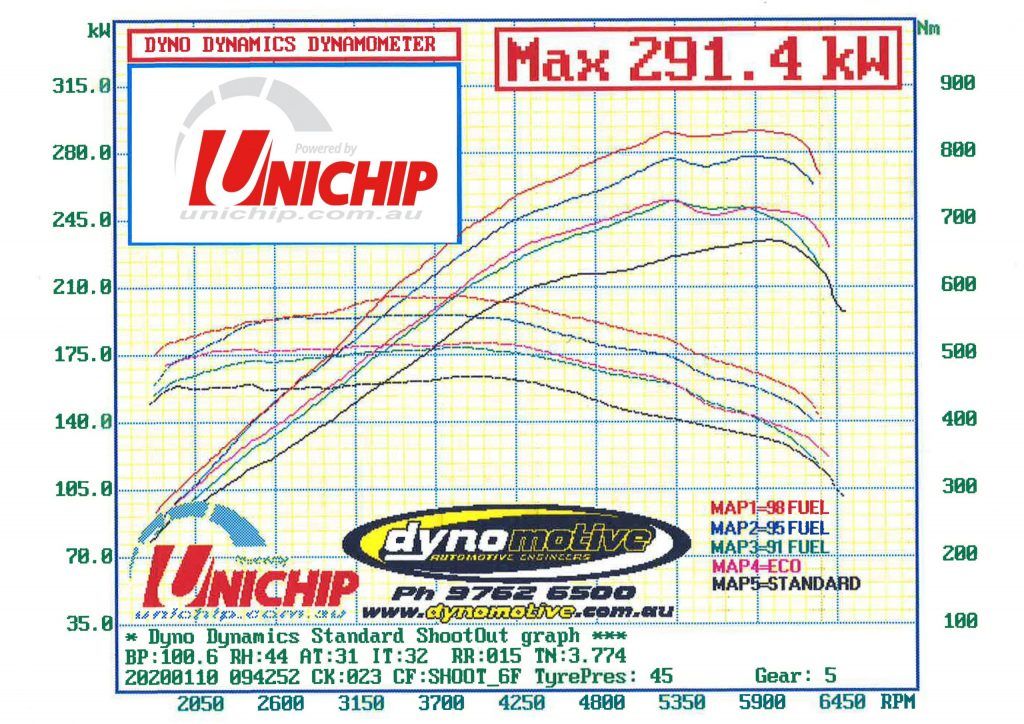
Unichip: 291.4 Rear wheel kw
Standard: 520nm at the wheels.
Option 3
+ Min 85-95 RWKW
$6799 INC GST
Stinger GT 3.3lt – Uni-X ECU
This Package includes the following:
- Uni-X ECU
- LIVE Dyno tune
- Air Intake
- Dump Pipe Back Exhaust (From the primary Cat’s) Optional extra Bimodal rear mufflers $880.00
Air Intake:
- Increased horsepower
- Tuned and dyno-tested to improve acceleration and engine sound
- Easy to install using commonly available tools
- Air filter lasts up to 100,000 miles before cleaning is required (depending on driving conditions)
- Washable and reusable oil-free filter media
- Roto-molded Plastic Air Intake Tubing
- AEM Lifetime Limited Warranty
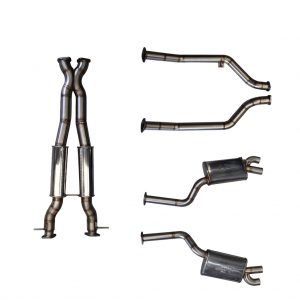
Cat back Exhaust in Stainless steel
Features:
- From the dump pipes 3” Mandrel bent Stainless steel.
- The Centre 3” Resonators
- Tapered 2.5” Rear mufflers designed to fit the factory Kia Tips. (There is no noticeable decrease in power using 2.5” rear mufflers over 3”, however there is a significant increase in drone with 3” rear mufflers)
Results:
Power:
Unichip: 305.7rwkw
Torque:
Unichip: 590nm
Results measured at the wheels*

Option 4
+ Min 100-110RWKW
$8990INC GST
Stinger GT 3.3lt – Uni-X ECU
This Package includes the following:
- Uni-X ECU
- LIVE Dyno tune
- Air Intake
- Secondary Cat Delete Pipes
- Cat-Back Exhaust (Bi-modal option + $800)
- Dump Pipes
Air Intake:
- Increased horsepower
- Tuned and dyno-tested to improve acceleration and engine sound
- Easy to install using commonly available tools
- Air filter lasts up to 100,000 miles before cleaning is required (depending on driving conditions)
- Washable and reusable oil-free filter media
- Roto-molded Plastic Air Intake Tubing
- AEM Lifetime Limited Warranty
Dynomotive Cat Back Exhaust in Stainless steel
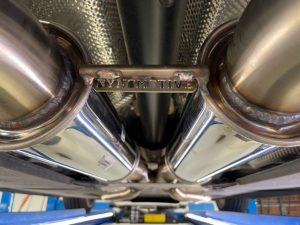
Dynomotive Built Kia Stinger GT Dump Pipe back exhaust.
This Hi-flowing exhaust bolts up to the original dump pipe flange and is complete all the way to the rear mufflers in the ultimate in Australian designed and manufacturing. Featuring stainless steel mandrel bent, tig welded system that emits zero drone into the cabin. This has been the combination of countless hours of R & D, unlike other manufactures we own our Kia Stinger GT and have tested nearly every exhaust combination on the market.
We found that there was not one exhaust on the market that offered the flow required while and still keeping the exhaust note that we were after that also had no drone in the cabin.
So, we made our own.
A similar combination of this is exhaust in our record breaking 700hp at the wheels kia stinger.
What is in the box?
- From the dump pipes 3” Mandrel bent Stainless steel.
- The Centre 3” Resonators
- Tapered 2.5” Rear mufflers designed to fit the factory Kia Tips. (There is no noticeable decrease in power using 2.5” rear mufflers over 3”, however there is a significant increase in drone with 3” rear mufflers)
Dynomotive Dump pipes:
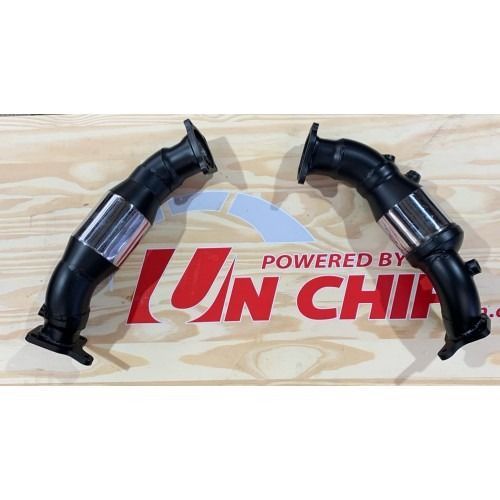
Stainless Steel Dump pipes.
Australian made Dump pipes with 100 cell hi-flow cats, 3″ outlet to Cat 2.5″ post-cat.
Specifically designed for your Kia Stinger GT easy fitment in the original position to standard cat-back exhaust.
Best tuned with the Unichip E.C.U LIVE on the dyno, with supporting mods over 330rwkw is achievable through these dump pipes.
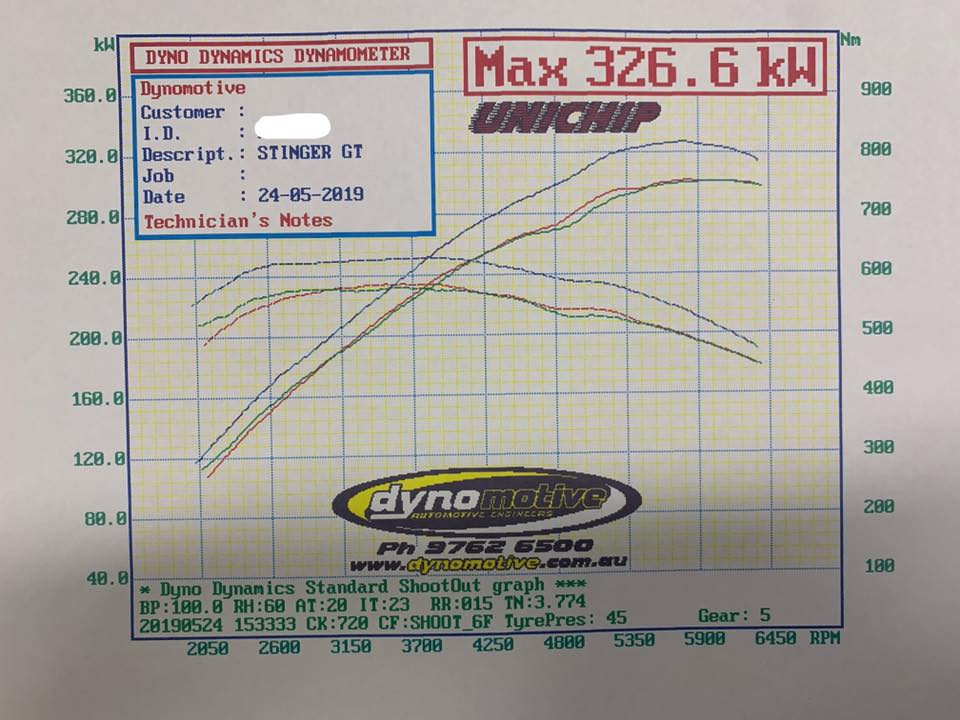
Results
Power:
Before: 296rwkw
After: 326.6rwkw
Torque:
Before: 590nm
After: 630nm
Option 5
750HP
TBA